The Kitchen Behind Villa Bordoni
There is a particular kind of quiet that settles over Il Guardingo before service begins. The wood oven — the same one once used in the villa’s original kitchen — is already warm. Copper pots catch the last light through windows that look out over olive groves and the medieval rooftops of Greve in Chianti. And somewhere between the stone fireplace and the pass, the evening’s menu is taking its final shape.
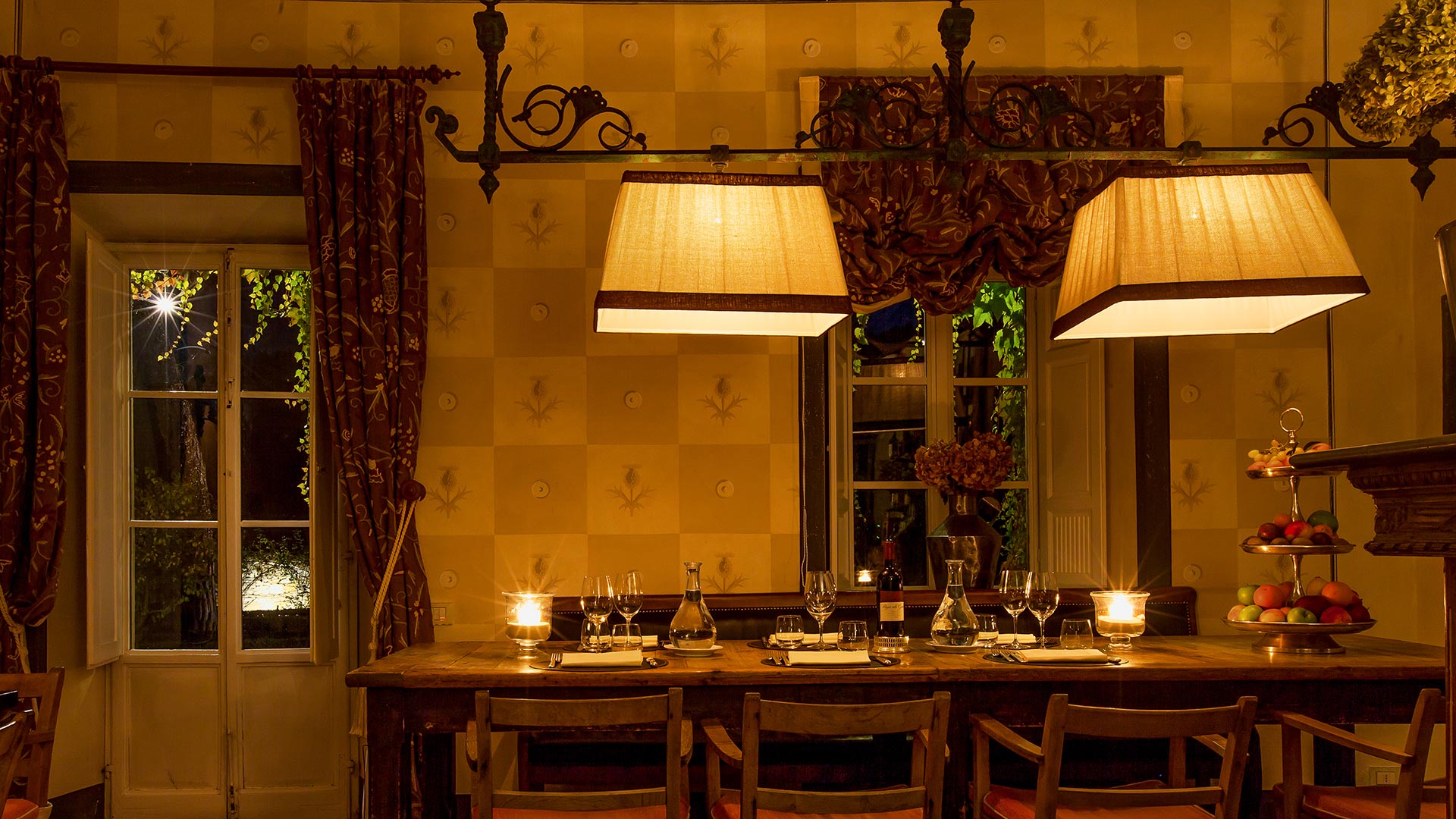
Il Guardingo sits on the hill directly above Greve, inside the historic core of Villa Bordoni. The dining room has kept what the villa always had: aged wood-beamed ceilings, a stone hearth, terracotta floors worn smooth by centuries of use. In warmer months, tables move outside, where guests dine under the stars among palms and maritime pines, with vineyards and ancient olive groves stretching toward the villages on the ridgeline beyond. It is not a stage set built to look historic — it is the real kitchen of a villa that has been feeding people on this hill since the eighteenth century, when Giuseppe Bordoni first began bottling the estate’s own Chianti Classico under the name Mezzuola, back in 1782.
That inheritance shapes everything that comes out of the kitchen today. The philosophy at Il Guardingo is unfussy by design: Tuscan cooking built on what the season and the surrounding countryside actually provide, treated with enough restraint that the ingredient — not the technique — stays the center of attention. It shows in small dishes as much as large ones: a poached egg finished simply with shaved truffle, local sheep’s and goat’s cheeses served with little more than good honey and a warm crostino, tagliolini tossed with porcini when they’re in season rather than whenever the calendar says they should be.
The dish that says it best
If one plate captures what the kitchen is doing, it is the peposo di bue — a Tuscan classic long before it was a restaurant menu item. The story goes that peposo was born not in a professional kitchen at all, but among the fornaciai, the kiln workers of Impruneta who fired the terracotta and roof tiles used across the region, including — as legend has it — the tiles of Brunelleschi’s dome in Florence. Between shifts tending the kilns, the workers would set a pot of tough beef cuts, plenty of black pepper, and local red wine to simmer slowly at the fire’s edge, letting the heat that fired the clay also do the cooking. Hours later, what emerged was something far more than the sum of its humble parts.
At Il Guardingo, the dish is treated with that same patience: beef braised low and slow with juniper, bay leaf, and the estate’s own Chianti, until the meat gives way at the touch of a fork and the sauce has reduced into something dark, peppery, and deeply savory. It is, in a sense, the most honest dish on the menu — no rare ingredient, no elaborate plating, just time, good wine, and a cut of beef that has nowhere to hide. Paired with a glass of the villa’s own Chianti Classico, it draws a fairly direct line between what is in the glass and what is on the plate, both grown and made on the same hillside.
It sits comfortably alongside the kitchen’s other reference points: potato tortelli finished in a Chianina beef ragù, a proper bistecca alla Fiorentina cooked over the fire for two, cantucci and Vin Santo to close the meal the way the region has closed meals for generations. None of it strains for novelty. All of it assumes that a place with an eighteenth-century wine cellar and its own olive groves doesn’t need to look very far for its next good idea.
More than a dinner reservation
For guests who want to go further than the dining room, Villa Bordoni’s Chianti Cooking School turns some of this same philosophy into a hands-on afternoon — a market visit, a few classic recipes, and a seat at the table for the results. It is, in many ways, the same story told from the other side of the stove: that the best Tuscan cooking rarely needs reinventing, only the right hands, the right hour, and ingredients that didn’t have to travel far to get there.
Reserve a table, or ask at the front desk about upcoming cooking school dates, to taste it for yourself.